Toddler Playroom Ideas: 16 Budget-Friendly Designs for Small Homes
Small homes often struggle with limited space, making it hard to create safe play areas for toddlers. Clutter grows quickly, and parents feel stressed managing toys and daily mess indoors.
Many families lack organized inspiration to turn unused corners into functional play spaces. Without clear planning, rooms become unsafe and chaotic, reducing children’s creativity and independent play opportunities at home. Toddler Playroom Ideas
Smart storage, soft flooring, and multi-use furniture help transform tight spaces into safe play zones. Simple designs support learning, movement, and easy cleaning for busy parents every single day easily.
Toddler Playroom Ideas: 16 Fun & Functional Ways to Create a Safe Play Space
I’m going to share Toddler Playroom design Ideas to help you create a safe, fun, and functional play space. These simple inspirations can guide you in designing a comfortable area where toddlers can play, learn, and explore with ease.
1. Foam Mat Flooring Zone
Foam interlocking tiles are one of the most practical toddler playroom ideas, creating soft, cushioned flooring that helps protect toddlers from injuries during everyday falls and active play.
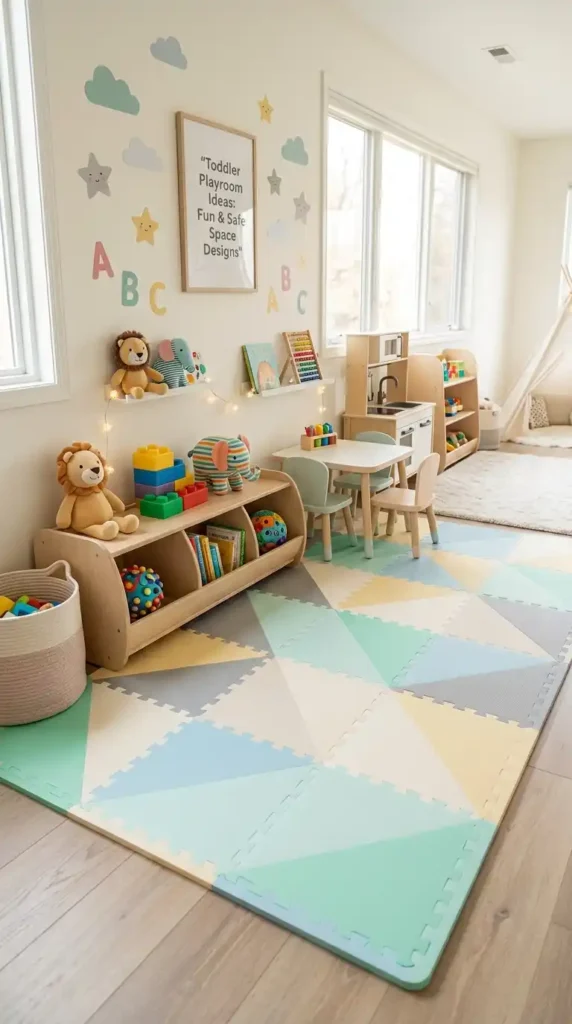
These budget-friendly mats are widely available and easy to install without tools. They can be removed anytime for cleaning or when updating your space layout, making them flexible and convenient for changing playroom needs.
2. Low Open Shelving for Toy Storage
Low open shelves give toddlers easy access to their toys independently. Organized bins on each shelf encourage children to find and return items themselves, building confidence and developing early organizational habits naturally every day.
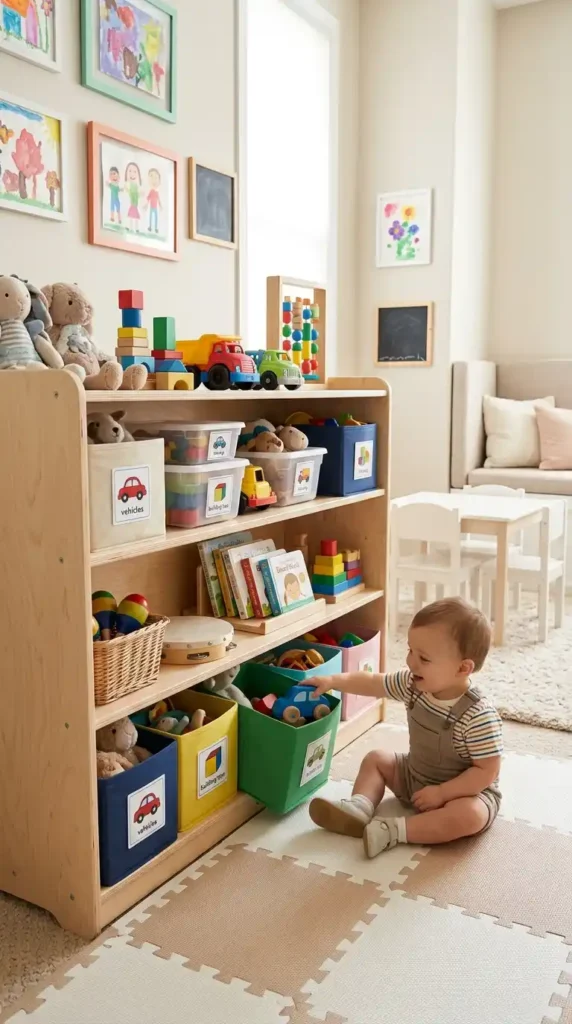
Choose sturdy, wall-anchored shelves to prevent tipping hazards. Label each bin with pictures so toddlers recognize where everything belongs, making cleanup faster and teaching simple categorization skills through enjoyable, repetitive daily routines at home.
3. Reading Nook Corner
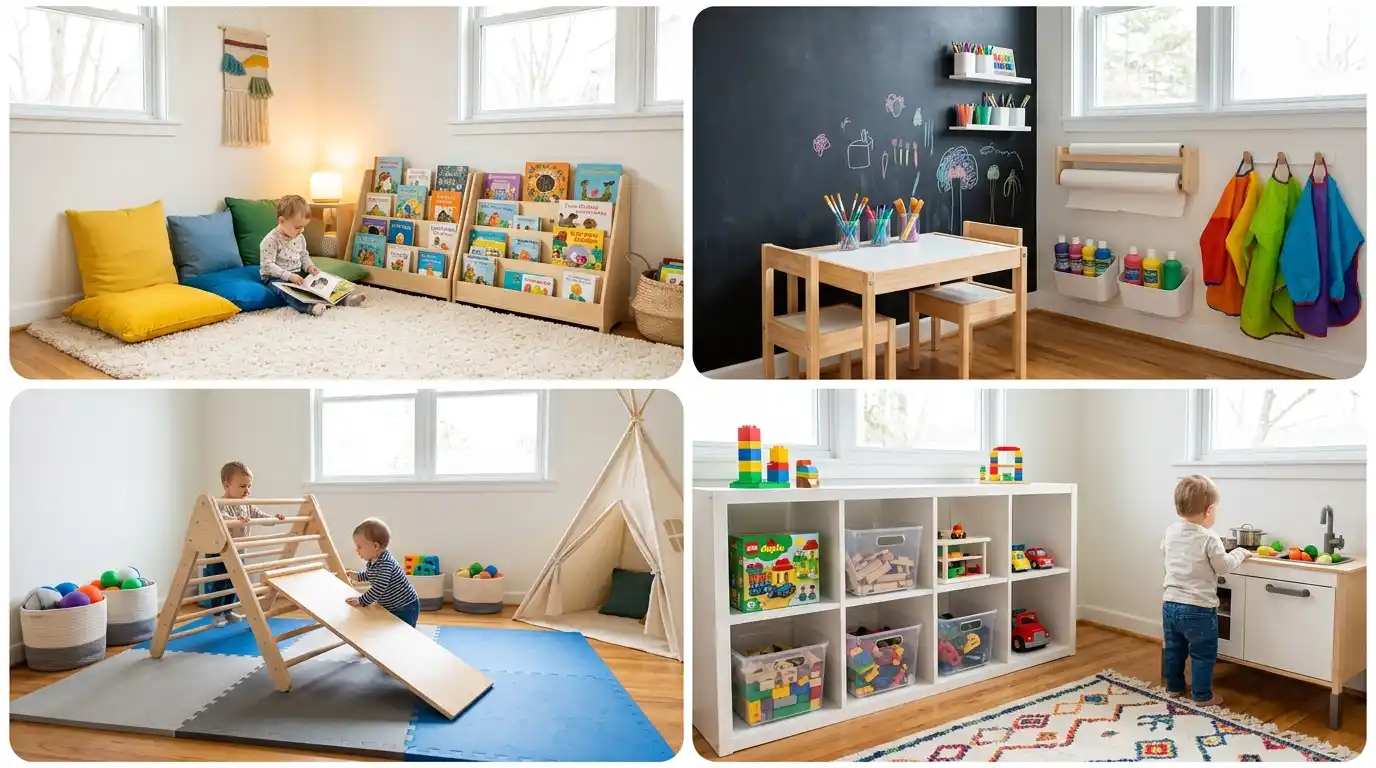
A cozy reading corner with soft cushions invites toddlers to explore books independently. Use a small bookshelf turned forward-facing so covers are visible, making book selection exciting and encouraging early literacy habits beautifully.
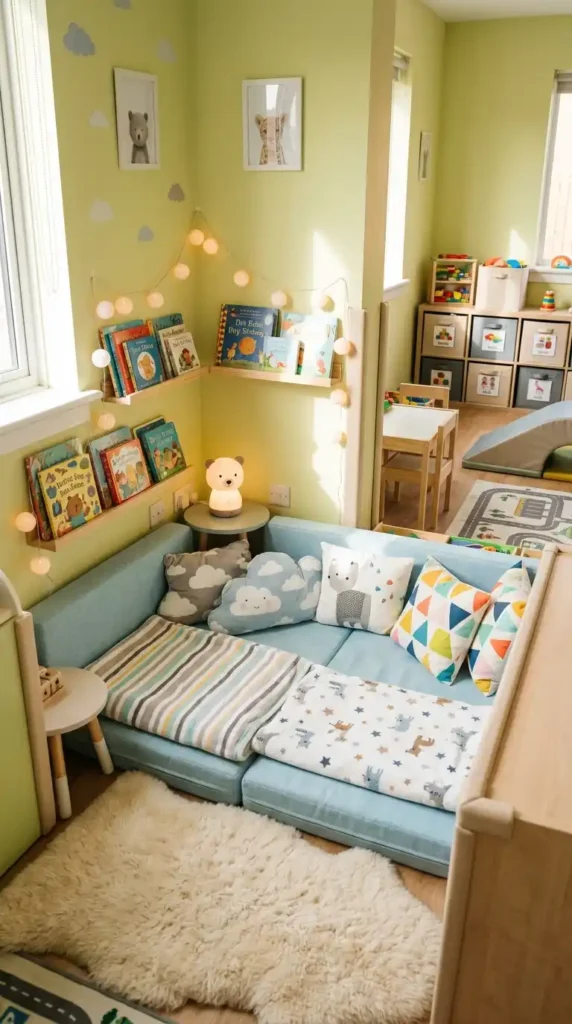
Add a canopy or curtain for extra coziness and defined boundaries. String fairy lights safely overhead to create a magical atmosphere that draws children in and makes reading feel like a special adventure daily.
4. Sensory Play Table
A sensory table filled with sand, water, or rice keeps toddlers engaged for hours. Sensory play builds fine motor skills, curiosity, and focus while providing calming, tactile stimulation that benefits overall child development greatly.
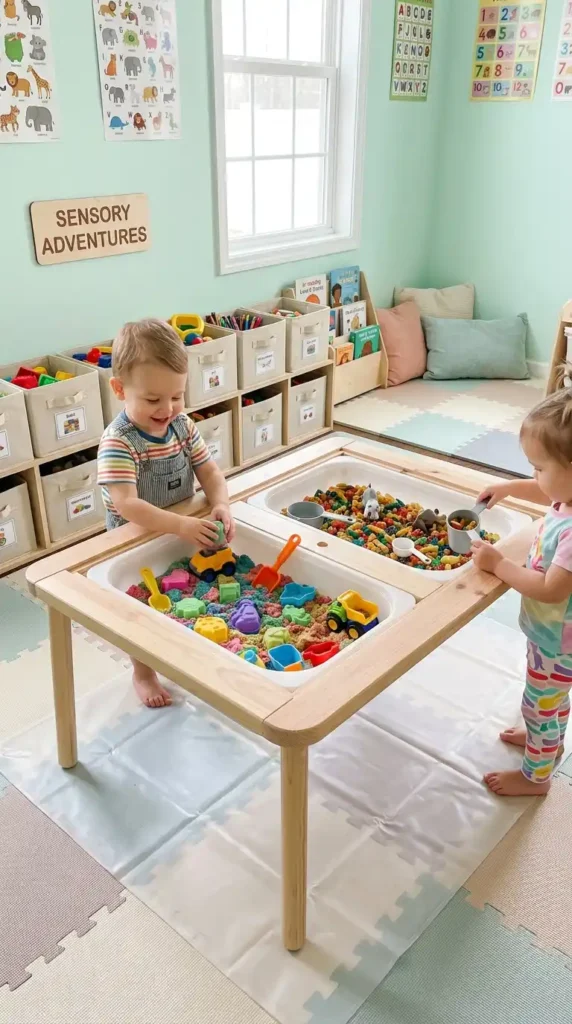
Choose a table with a lid for easy storage and mess containment. Rotate the fillings weekly to maintain interest and introduce new textures, keeping your toddler’s sensory experience fresh and consistently stimulating every time.
5. Art and Craft Station
A dedicated art station encourages creativity and self-expression in young children daily. Use a small table with washable surfaces and store supplies in labeled bins so toddlers can freely create without constant parental supervision.
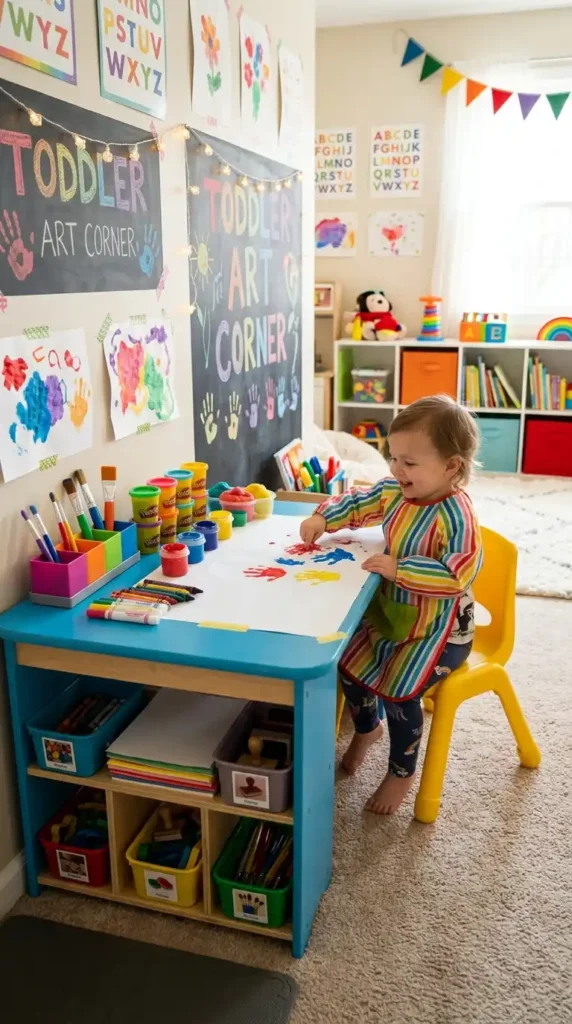
Hang a low chalkboard or paper roll on the wall for drawing. Keeping supplies accessible at toddler height builds independence and lets children initiate creative play anytime, reducing boredom and nurturing artistic confidence beautifully.
6. Indoor Climbing Structure
A small indoor climbing frame builds gross motor skills and physical confidence safely. Look for compact designs with soft padding underneath, perfectly sized for small rooms while giving toddlers exciting physical challenges every single day.
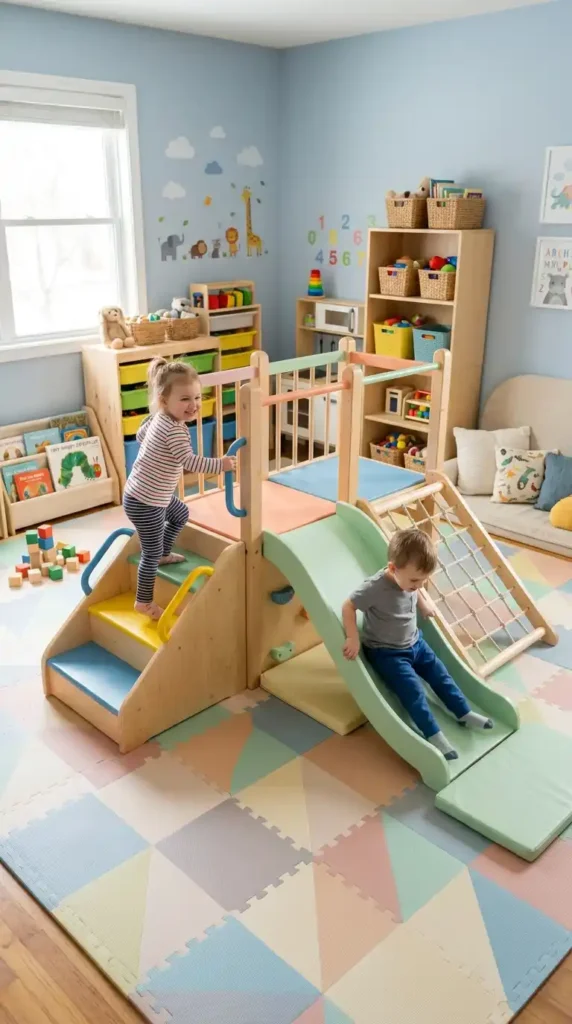
Climbing structures support balance, strength, and coordination in growing toddlers naturally. They also channel excess energy productively indoors, especially during rainy days when outdoor play isn’t possible, keeping children active and happily entertained always.
7. Pretend Play Kitchen Corner
A play kitchen sparks imagination and teaches toddlers about daily life through roleplay. Choose a compact wooden or plastic set that fits snugly into a corner without overwhelming your available small playroom space.
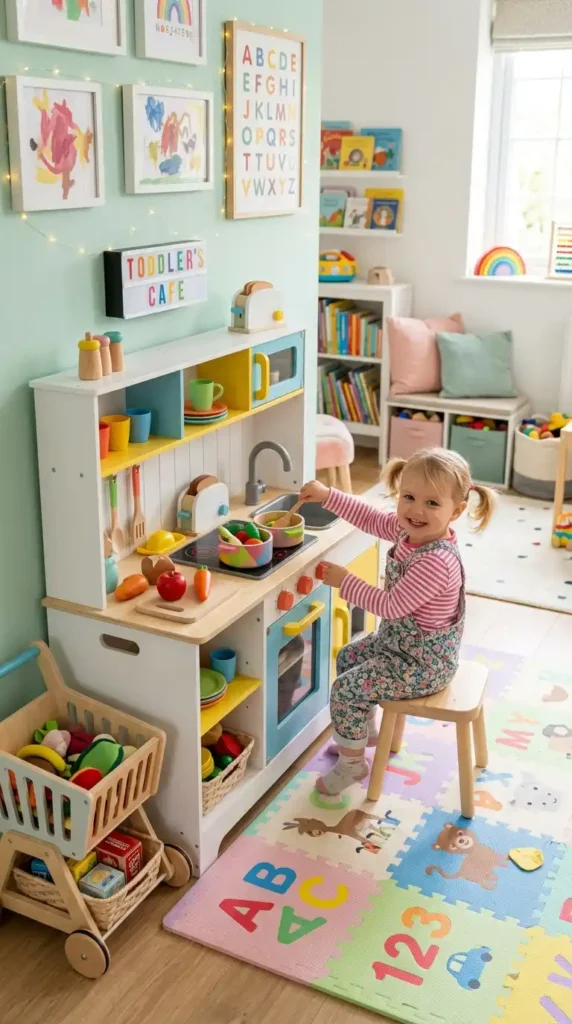
Stock the kitchen with toy food, pots, and utensils stored in small baskets. Rotating props keeps the play fresh and engaging, encouraging storytelling, social skills, and creativity in your toddler every single day effortlessly.
8. Wall-Mounted Pegboard Organizer
A pegboard mounted on the wall maximizes vertical storage in small playrooms efficiently. Hang bins, hooks, and shelves to store art supplies, small toys, or accessories neatly off the floor and within easy reach.
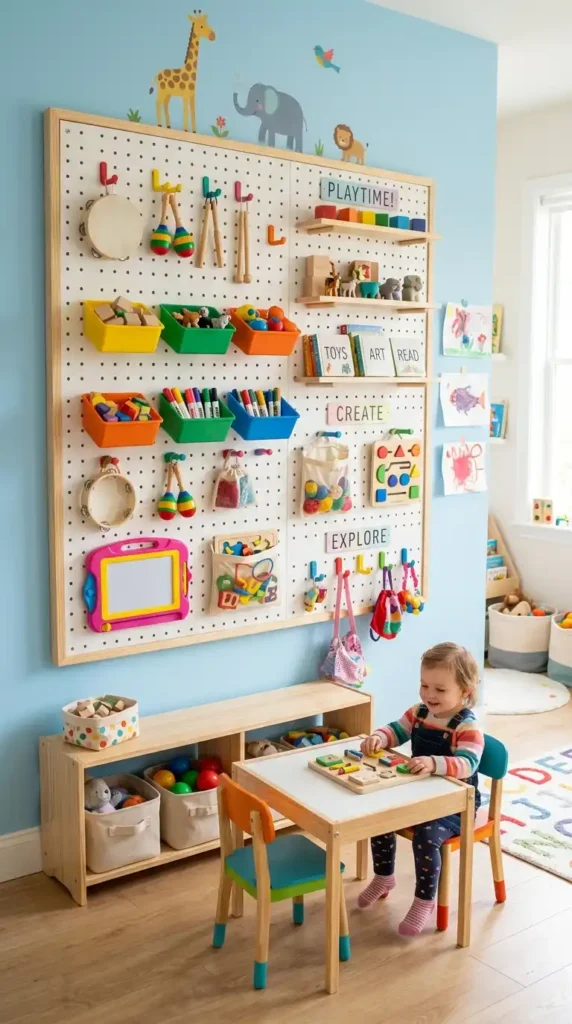
Customize your pegboard layout as your child grows and storage needs change. It’s an affordable, flexible solution that keeps walls functional and clutters off floors, making the entire playroom feel larger and more organized daily.
9. Tent or Teepee Play Area
A play tent or teepee is one of the most popular toddler playroom ideas, creating a private, cozy space toddlers absolutely love for imaginative play and quiet independent time daily.
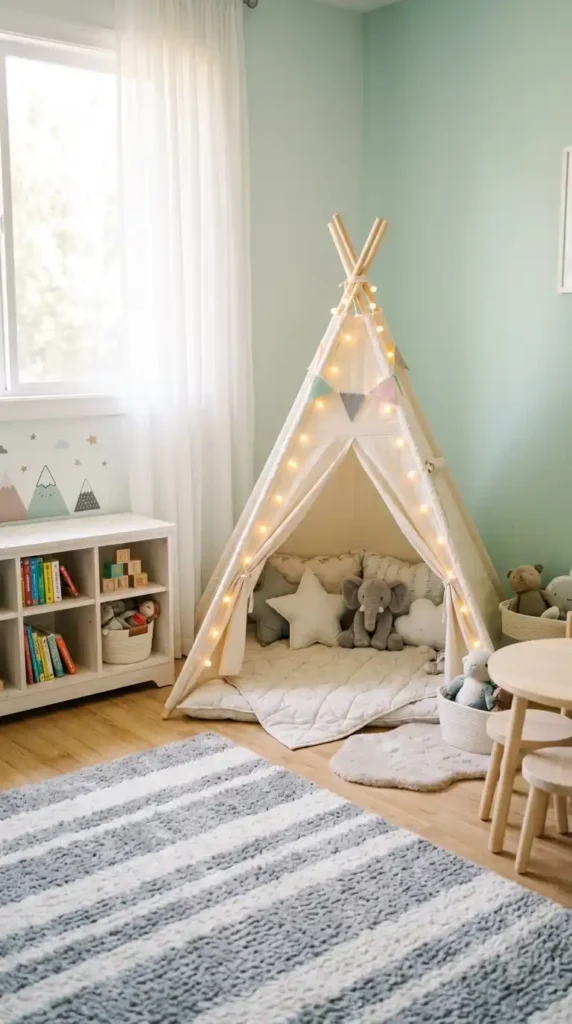
Choose a lightweight, foldable design so it can be easily moved or stored. Add soft pillows and favorite toys inside to make it inviting, comfortable, and a go-to retreat every day.
10. Chalkboard or Whiteboard Wall
A chalkboard or whiteboard wall turns an ordinary surface into an endless creative canvas. Toddlers can draw, erase, and start over freely, building fine motor control and encouraging artistic expression without wasting paper unnecessarily every day.
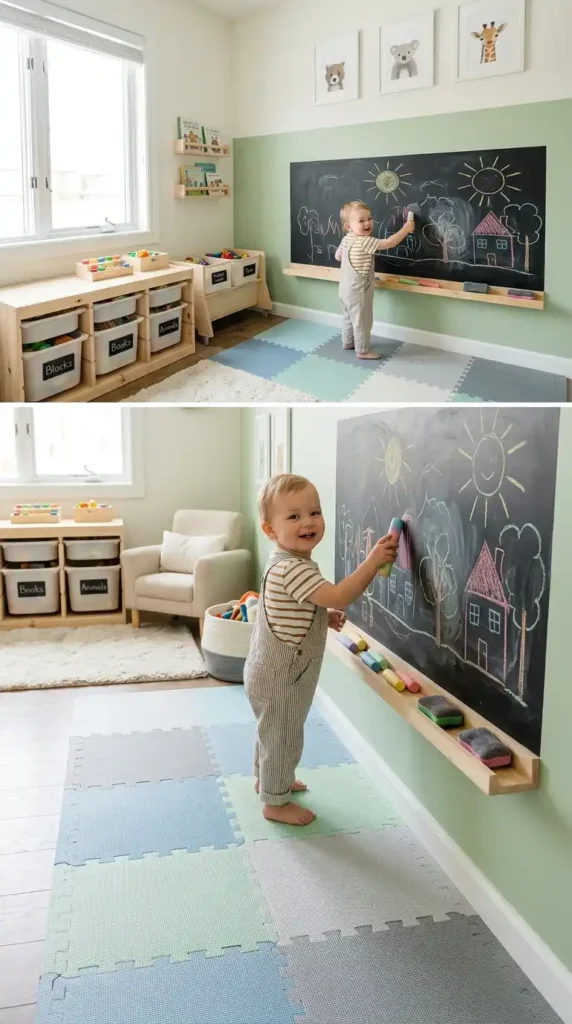
Use low-VOC chalkboard paint on one wall to keep costs minimal and practical. Set the board at toddler height so children can reach comfortably and play independently without needing assistance from a parent constantly nearby.
11. Soft Block Building Zone
A dedicated building zone with foam or soft blocks encourages problem-solving and creativity. Stack, knock down, and rebuild this simple activity supports spatial thinking, hand-eye coordination, and early math concepts in toddlers naturally every day.
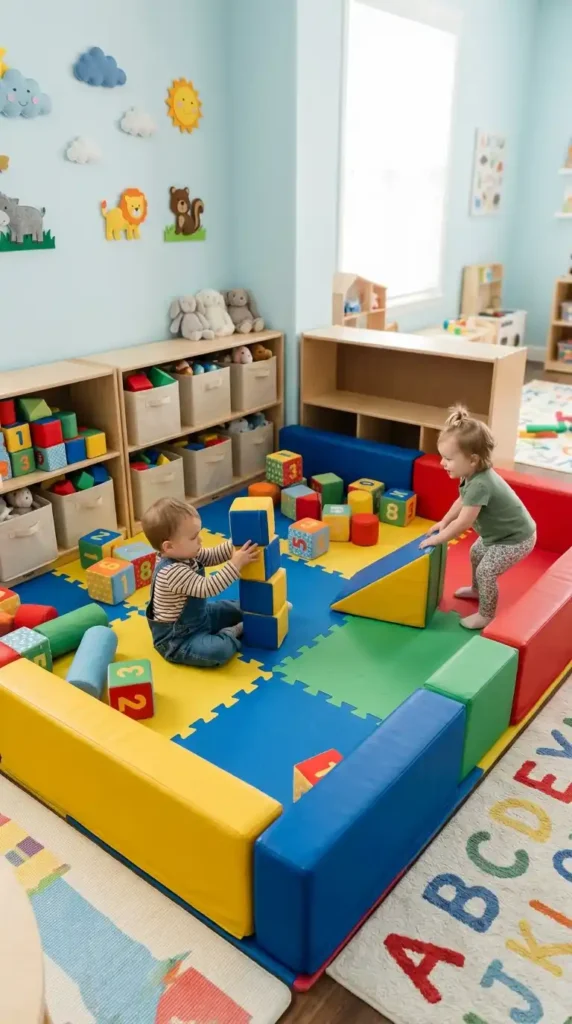
Store blocks in a large open bin for quick access and easy cleanup. A low-pile rug defines the building area, protects floors, and gives toddlers a comfortable surface to sit and play on freely.
12. Puppet Theater Station
A simple puppet theater, even a tension rod with a curtain sparks storytelling play. Toddlers develop language skills, emotional expression, and social understanding through puppet shows, making this one of the most developmental play setups available.
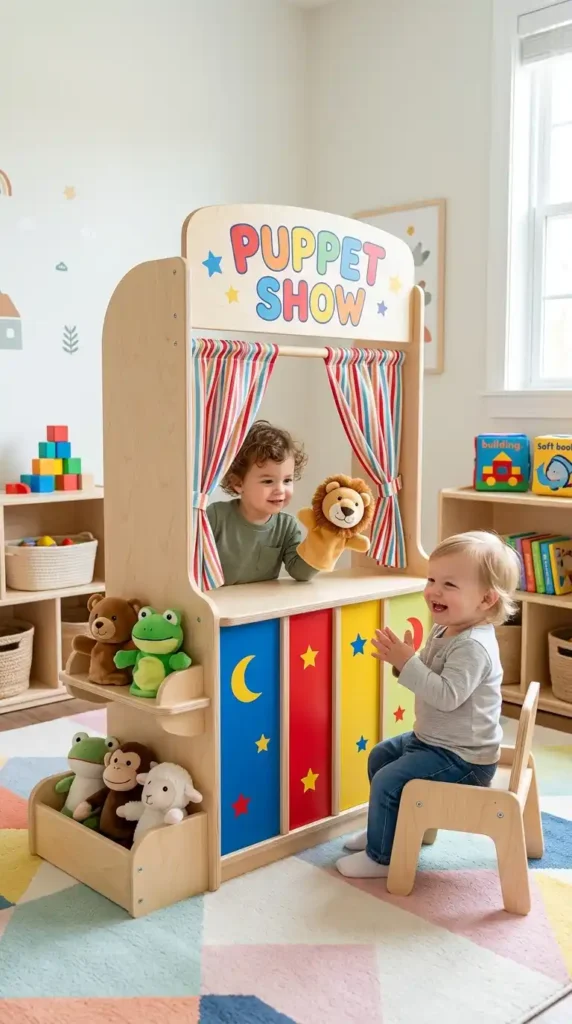
Store puppets in a hanging shoe organizer nearby for quick, independent access. Encourage your toddler to perform for stuffed animals, siblings, or parents, building early communication confidence through fun, low-pressure imaginative play every single day.
13. Multi-Use Storage Ottoman
A storage ottoman doubles as seating, a play surface, and hidden toy storage simultaneously. This smart multi-use furniture piece reduces clutter instantly while adding functional seating for parents supervising toddler play in small room spaces.
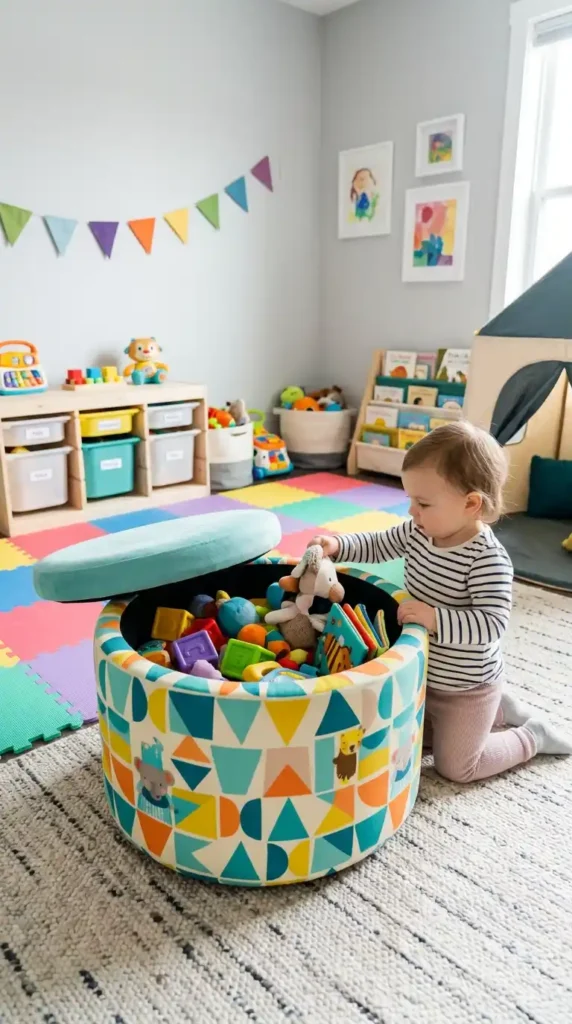
Choose a soft, rounded ottoman without sharp corners for toddler safety first. Neutral colors blend with any decor, and the hidden storage inside keeps the playroom looking tidy while keeping favorite toys always close at hand.
14. Music and Movement Corner
A small music corner with a xylophone, drum, or shakers encourages rhythm and movement daily. Musical play develops auditory skills, coordination, and emotional regulation, giving toddlers a healthy outlet for energy and self-expression throughout the day.
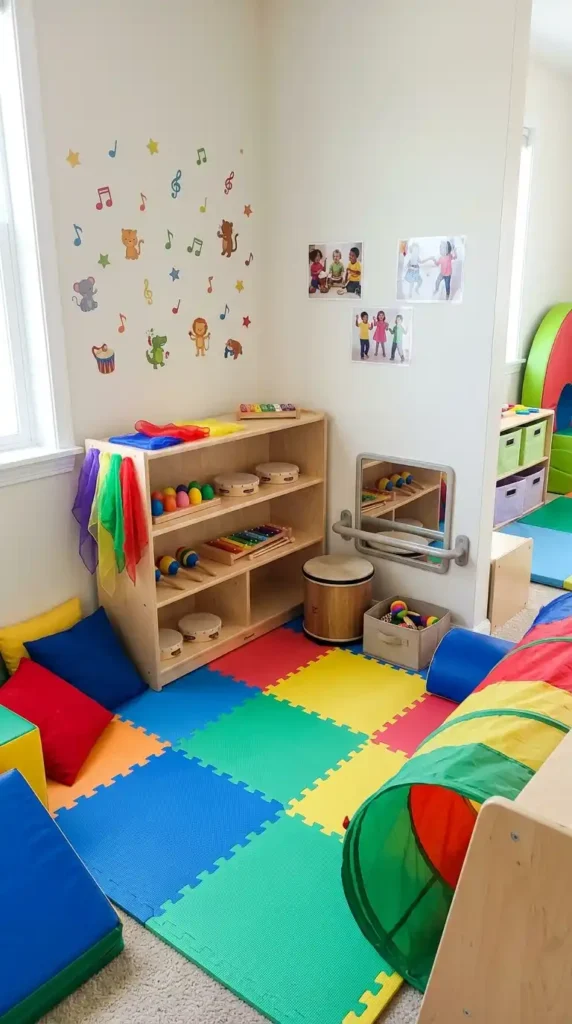
Keep instruments stored in a low basket for independent, child-led access always. Add a small open space nearby for dancing and movement, creating a complete sensory music zone that toddlers will return to joyfully every day.
15. Nature and Science Exploration Table
A low table with magnifying glasses, pinecones, and rocks invites curiosity and discovery naturally. Simple nature objects encourage observation, asking questions, and early scientific thinking in toddlers without requiring expensive or complicated equipment at all.
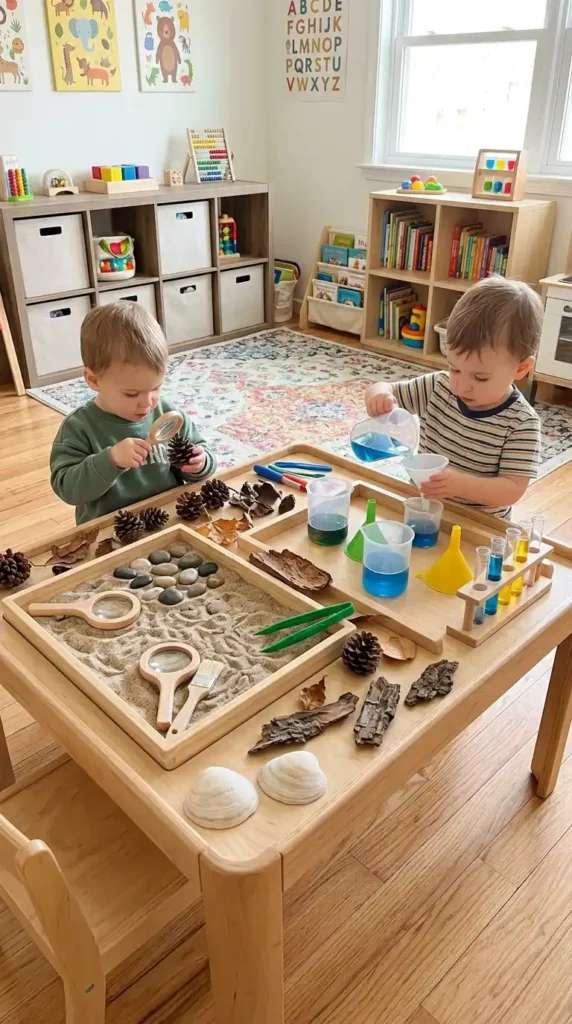
Rotate seasonal items to keep the table fresh, exciting, and connected to the world outside. Add simple picture books about nature nearby so toddlers can connect what they see with images, building early vocabulary and knowledge.
16. Designated Quiet Calm-Down Corner
A calm-down corner with soft textures, dim lighting, and comfort items is one of the best toddler playroom ideas for supporting emotional regulation and self-soothing during overwhelming moments effectively daily.
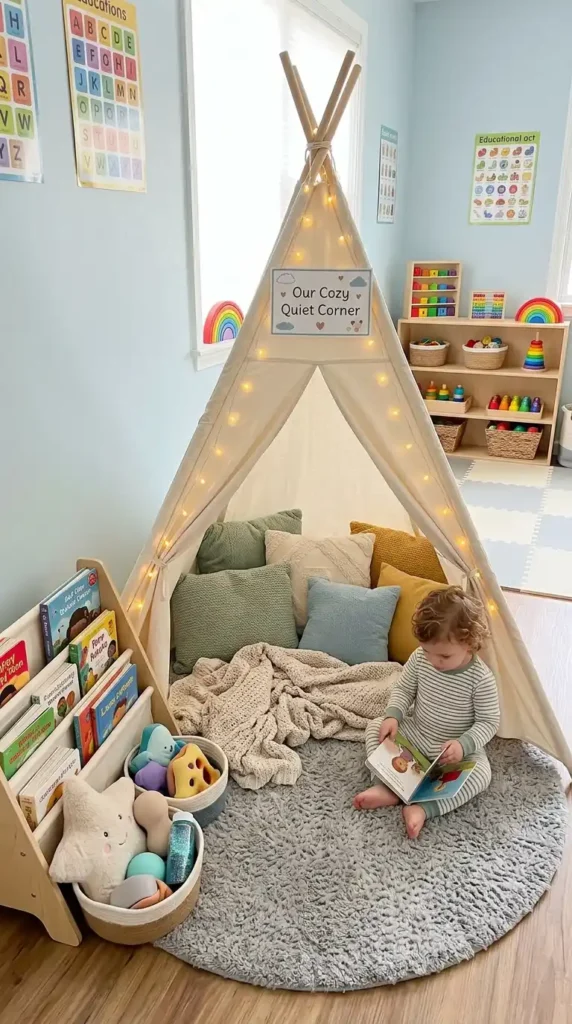
Include a weighted stuffed animal, soft blanket, and calm-down cards with simple visuals to make the space inviting. Keeping it consistent ensures toddlers view it as a positive retreat always.
Why Multi-Use Furniture Is the Secret to Small Playroom Success
Multi-use furniture saves space by combining storage, seating, and play surfaces into single pieces. A storage ottoman holds toys while doubling as seating. Foldable tables create art stations that tuck away easily, keeping small playrooms functional, organized, and clutter-free daily.
Multi-use furniture also grows with your toddler, offering lasting value without constant replacements. Convertible shelves become reading nooks. Bench seats open for toy storage. These smart investments stretch every dollar, making small playroom setups practical, budget-friendly, and adaptable for years ahead.
How to Choose the Right Flooring for a Toddler Playroom
Choosing the right flooring for a toddler playroom is very important for safety and comfort. Kids spend a lot of time on the floor, so it should be soft, safe, and easy to clean.
- Safety First: Choose flooring that offers cushioning like foam mats or soft vinyl to reduce injury risk during falls and active play.
- Easy to Clean: Pick materials such as vinyl or laminate that resist stains and can be quickly wiped clean after spills, snacks, or messy activities.
- Slip Resistance: Make sure the flooring has a non-slip surface to prevent accidents, especially when kids are running or moving quickly.
- Comfort and Warmth: Opt for flooring that feels warm and comfortable underfoot like carpet tiles or padded mats, especially in colder rooms.
- Durability: Select strong, scratch-resistant materials that can handle toys, rough play, and frequent use without getting damaged easily.
Conclusion
Thoughtful planning helps parents turn small rooms into safe, creative spaces. Every design choice supports comfort, learning, and independence, making daily play more organized and enjoyable for toddlers.
These toddler playroom ideas help families use space wisely and reduce clutter. With smart storage, soft flooring, and fun zones, children enjoy safe play while building skills and confidence every day.