20 Fun Kids Playroom Design Ideas to Inspire Creativity
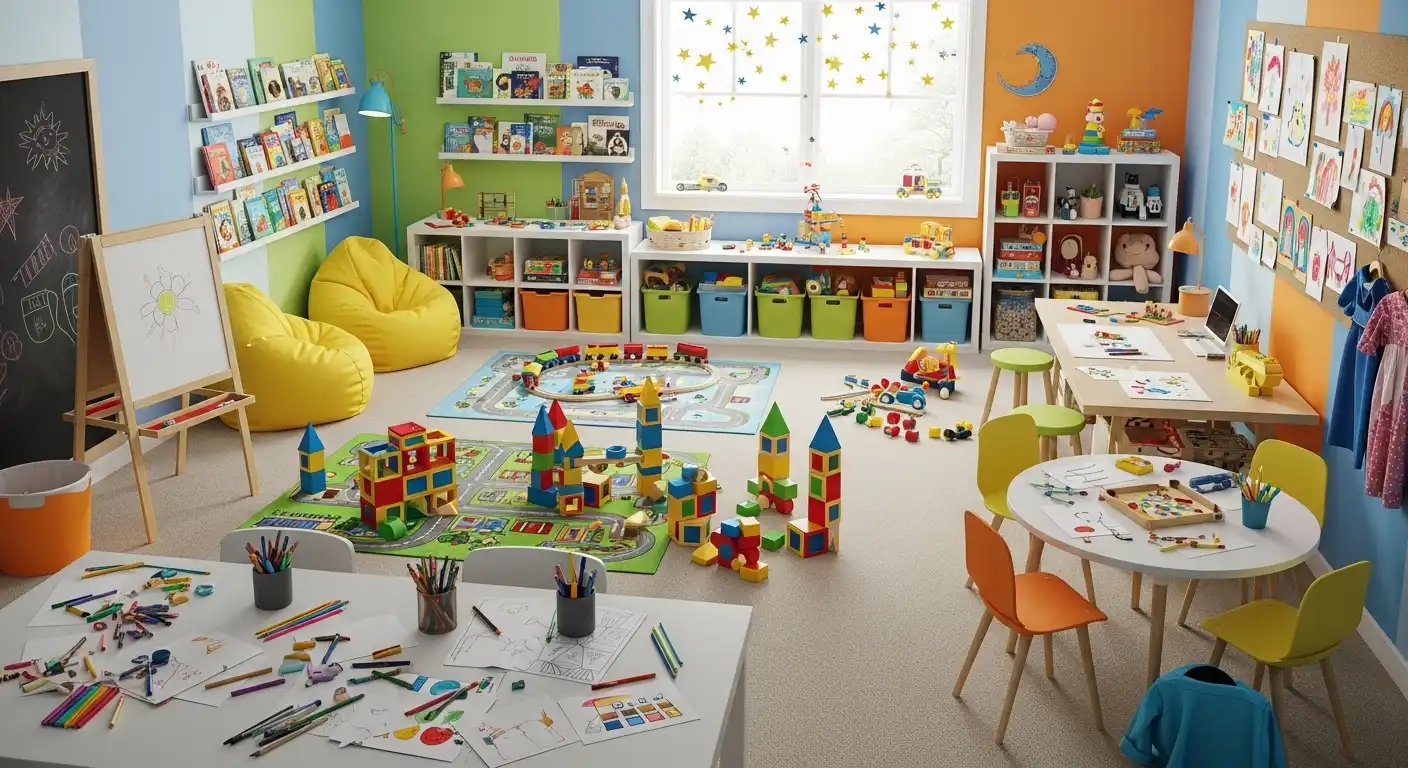
A kids’ playroom is more than just a space for toys; it’s a place where creativity, imagination, and fun come together. With the right combination of colors, furniture, and décor, you can create an environment that is both playful and organized, giving children a space to learn, play, and explore safely.
Clever storage solutions, activity zones, and themed décor can make any room feel exciting and functional. These kids playroom design ideas can help transform small corners or larger spaces into stylish and inspiring areas that your children will love spending time in.
How to Design Kids Playroom Your Children Will Love
Designing a kids’ playroom should be fun and practical. Choose bright colors, safe furniture, and plenty of storage to create a space your children will enjoy and feel excited to play in.
1. Hidden Toy Storage Inside Stair Steps
Hidden toy storage inside stair steps is a clever way to keep toys organized while saving space. Each step can double as a pull-out drawer, perfect for small blocks, cars, or stuffed animals. This keeps clutter out of sight while keeping toys easily accessible.
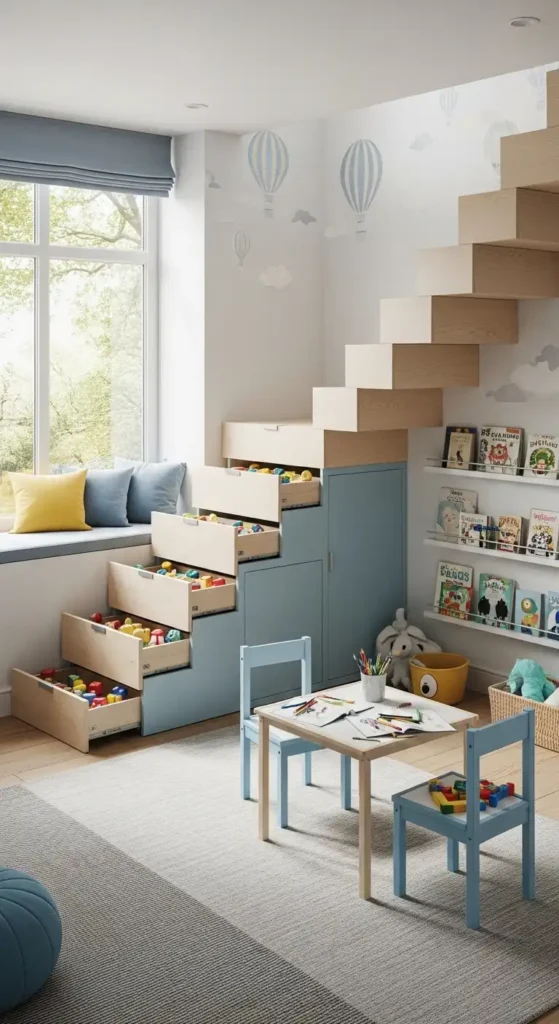
This design is ideal for multi-level playrooms or homes with loft areas. Kids can enjoy the fun of “secret” storage, making cleanup feel like a game rather than a chore.
2. Convertible Wall Desk That Folds Away After Play
A convertible wall desk allows kids to have a dedicated space for drawing or homework that can be folded away when playtime starts. This saves floor space and keeps the room versatile for multiple activities.
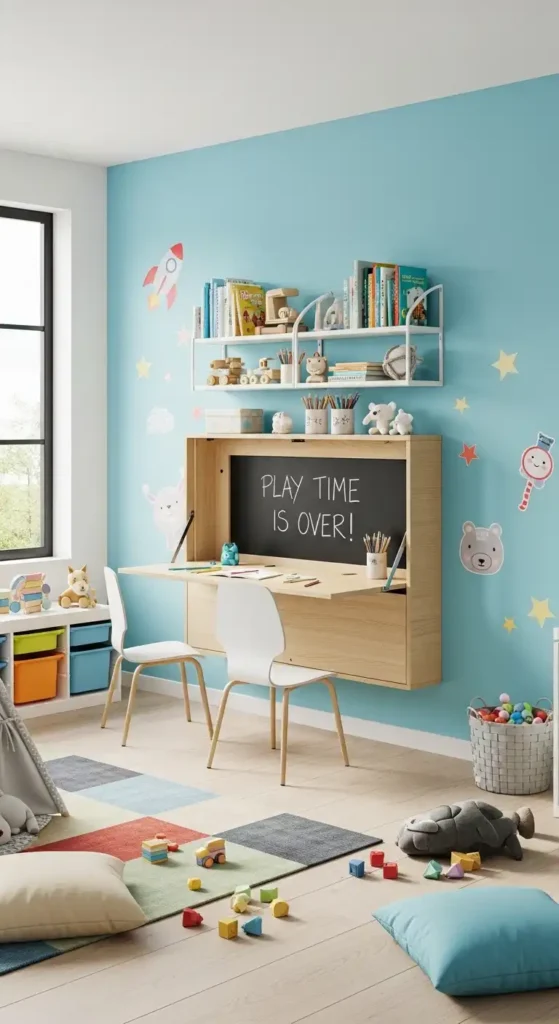
The desk can include storage compartments for markers, crayons, or notebooks. It encourages both creativity and organization, helping kids maintain a tidy playroom effortlessly.
3. Ceiling-Hung Swing Or Hammock Chair
A ceiling-hung swing or hammock chair adds fun and movement to the playroom. Kids can read, relax, or swing gently, giving them a cozy and interactive corner.
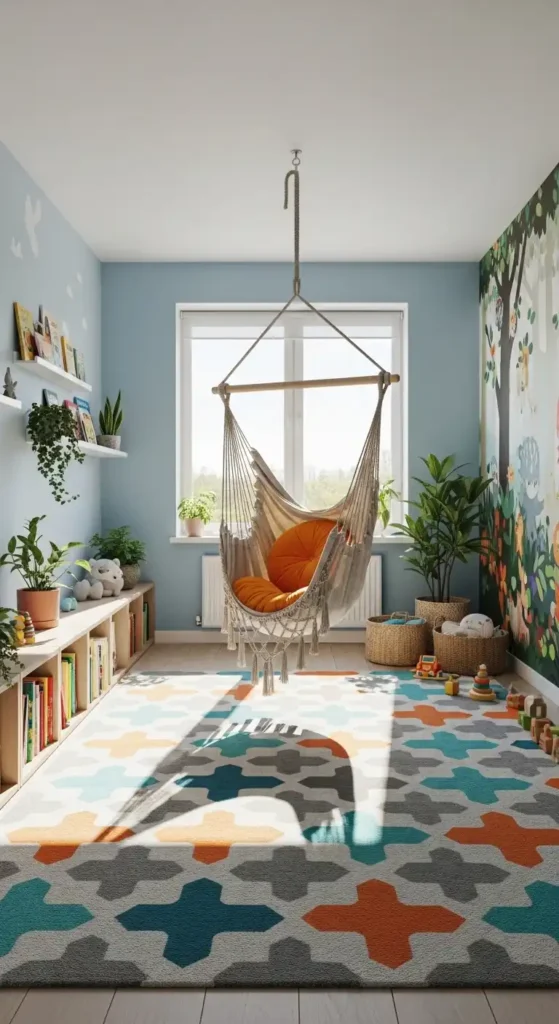
This design also makes great use of vertical space. It encourages physical activity and can become a favorite spot in the room for quiet time or imaginative play.
4. Glow-In-The-Dark Floor Pathways For Night Play
Glow-in-the-dark floor pathways create a magical environment for night-time play. Kids can follow the glowing path for games, treasure hunts, or bedtime adventures.
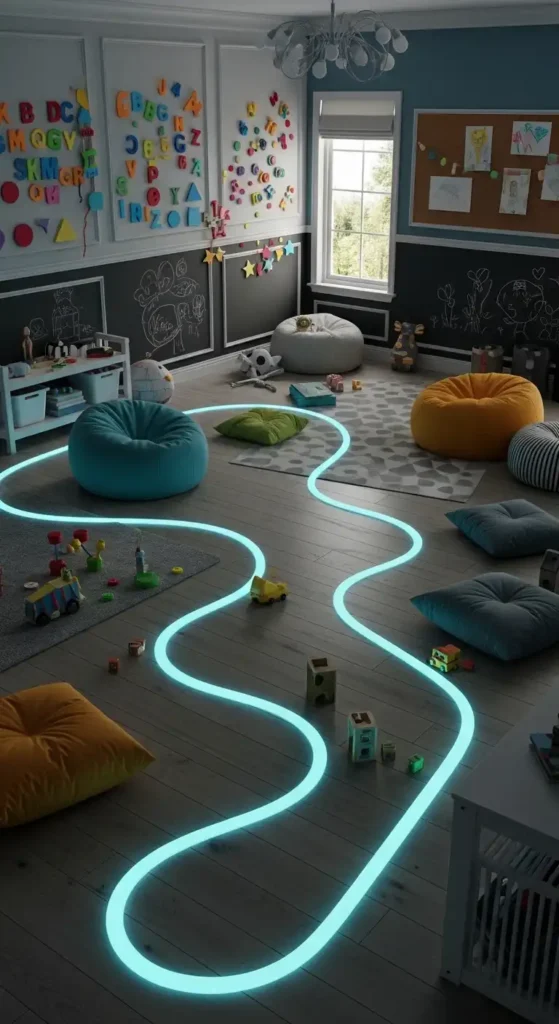
These pathways also add a playful design element to the room. They are perfect for sparking creativity and adding excitement, especially for younger children who love interactive features.
5. Interactive Projection Wall For Games And Stories
An interactive projection wall turns an ordinary wall into a digital playground. Kids can play games, watch educational animations, or read interactive stories directly on the wall.
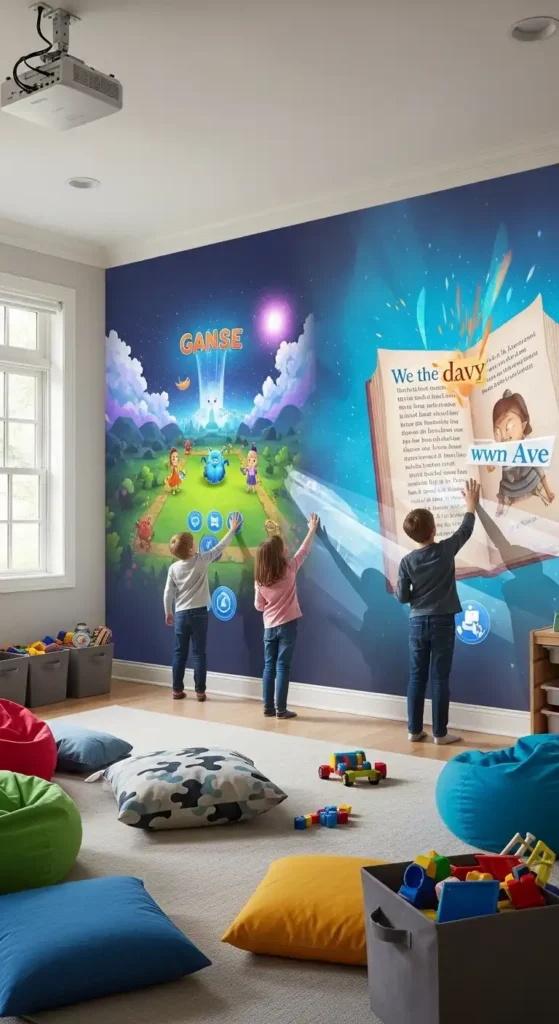
This setup encourages both fun and learning. It’s perfect for a modern playroom where technology enhances creativity and imagination without cluttering the floor.
6. Low-Level Windowsill Seating For Natural Light Play
Low-level windowsill seating allows kids to enjoy natural light while playing, reading, or doing crafts. Adding cushions makes the space cozy and inviting for long periods of use.
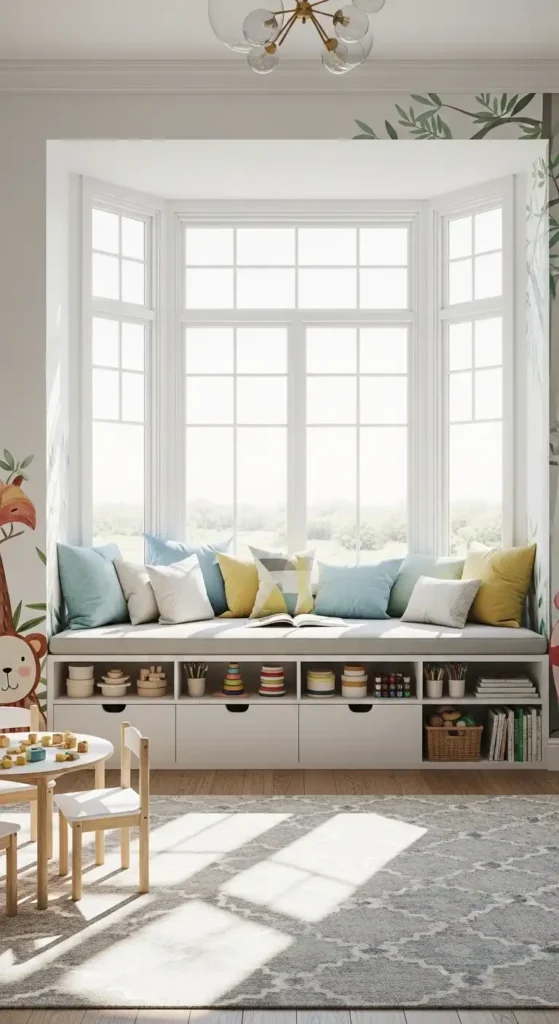
It also maximizes underused window areas. This design encourages kids to engage with sunlight and fresh air, making playtime healthier and more pleasant.
7. Rotating Toy Display Shelf To Reduce Clutter
A rotating toy display shelf makes it easy for kids to see and access their toys. It can help reduce clutter by keeping toys organized and visually appealing.
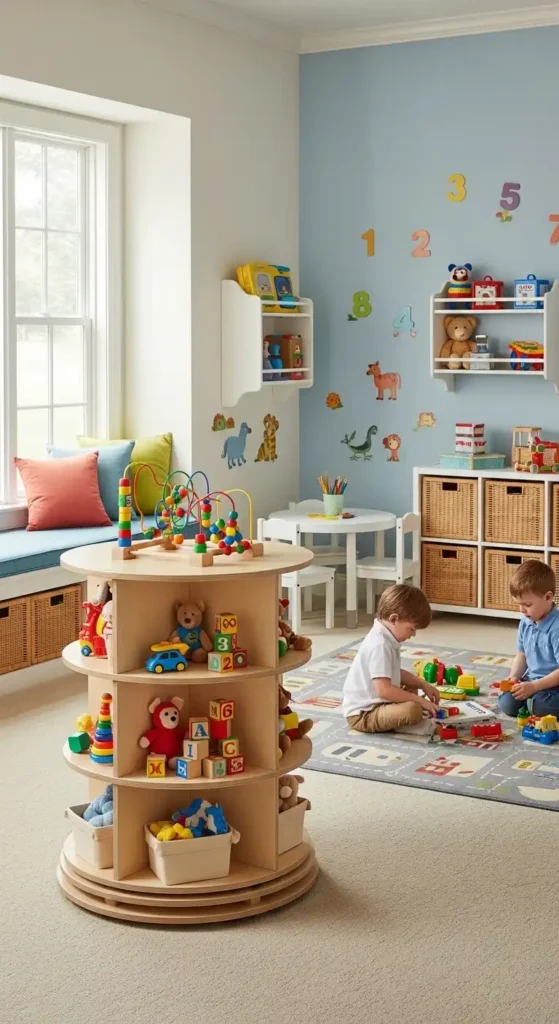
These kids playroom design ideas also encourage kids to rotate toys and try new activities. They keep the playroom fresh and exciting while teaching organization skills naturally.
8. Floor-To-Ceiling Pegboard For Custom Play Setups
A floor-to-ceiling pegboard provides a flexible way to organize toys, art supplies, or interactive panels. Kids can customize their setup by moving hooks, baskets, and shelves around.
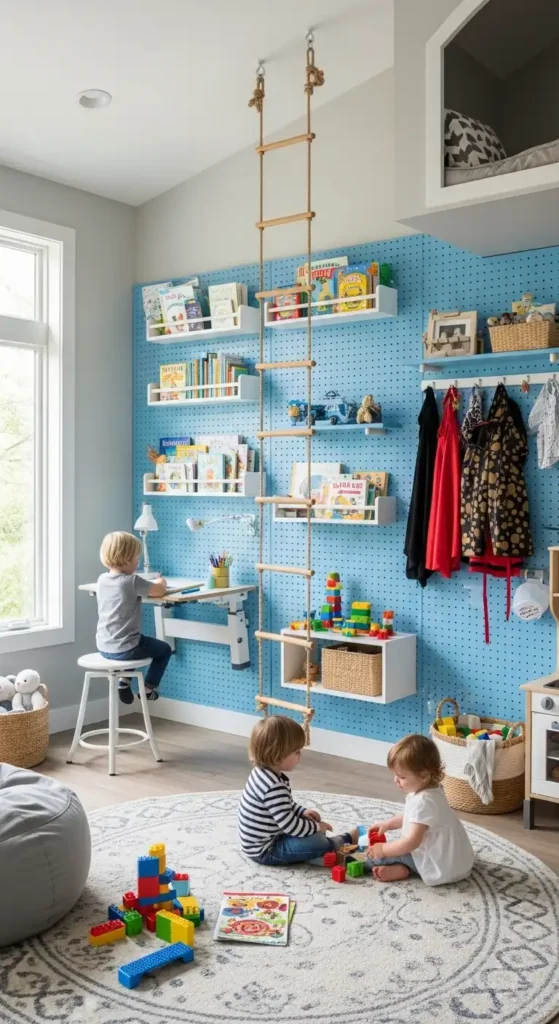
This design grows with your child, adapting to changing interests and activities. It encourages independence while keeping the playroom neat and functional.
9. Roll-Out Play Mats Stored Inside Cabinets
Roll-out play mats can be easily stored inside cabinets when not in use. This keeps the play area tidy and allows for quick setup whenever kids want to play.
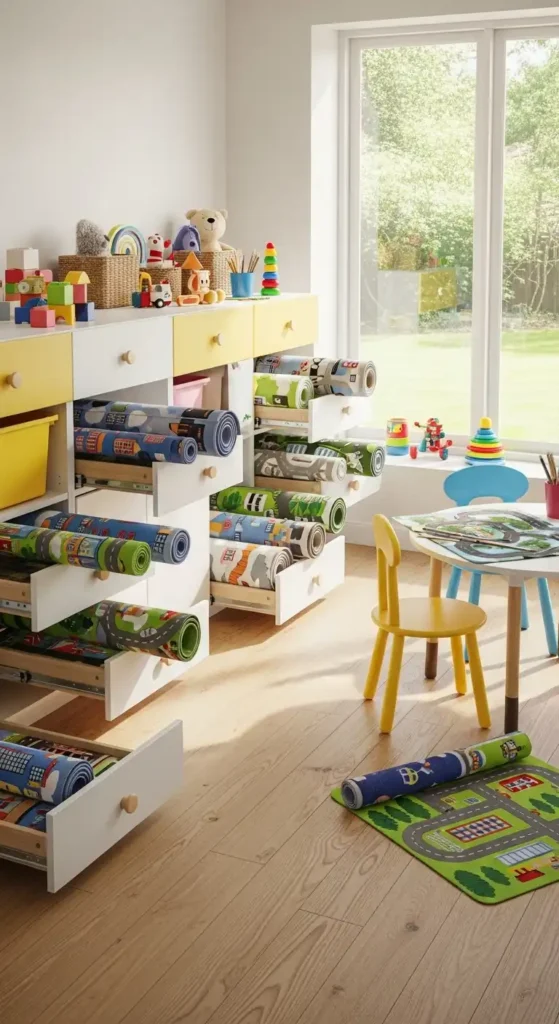
These mats are perfect for art projects, building blocks, or imaginative play. They also protect the floor and add a colorful, interactive element to the room.
10. Built-In Lego Table With Sliding Cover
A built-in Lego table with a sliding cover gives kids a dedicated space to build without worrying about cleanup. The sliding cover lets them hide unfinished projects safely.
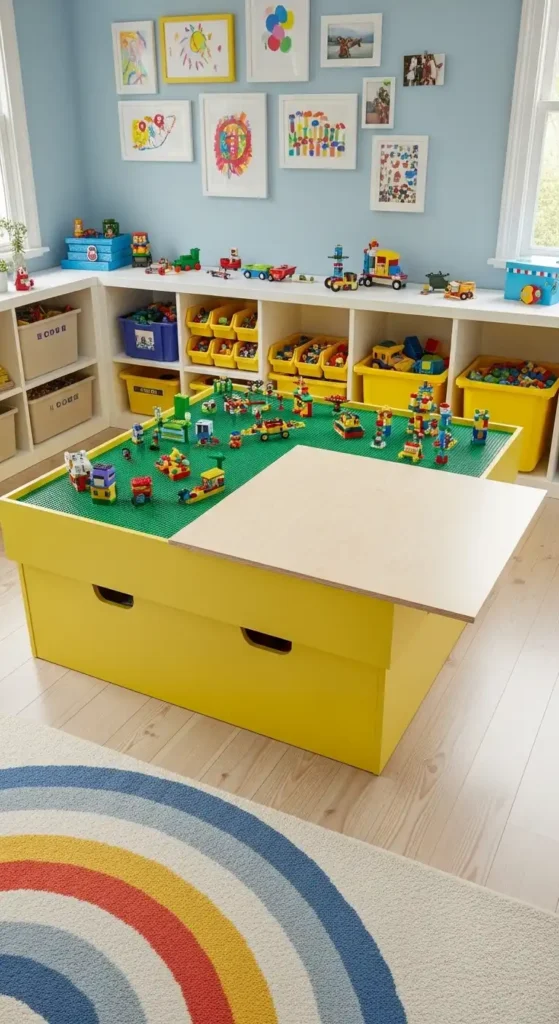
This design keeps bricks organized and off the floor. It also encourages structured play and creativity, making it a practical yet fun addition to any playroom.
11. Color-Changing LED Lighting Controlled By Kids
Color-changing LED lighting lets kids customize the room’s ambiance. They can choose bright colors for playtime or softer hues for relaxation and reading.
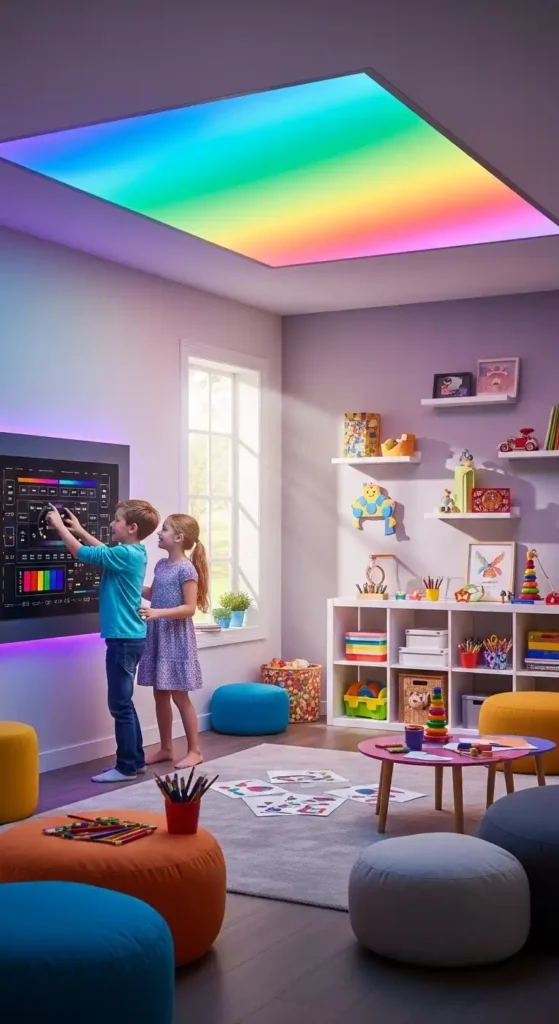
This interactive feature adds a sense of ownership and excitement. It also enhances creativity by allowing kids to experiment with different moods and atmospheres.
12. Quiet Zone With Sound-Absorbing Wall Panels
A quiet zone with sound-absorbing panels provides a calm corner for reading, homework, or nap time. It helps reduce noise from active play elsewhere in the room.
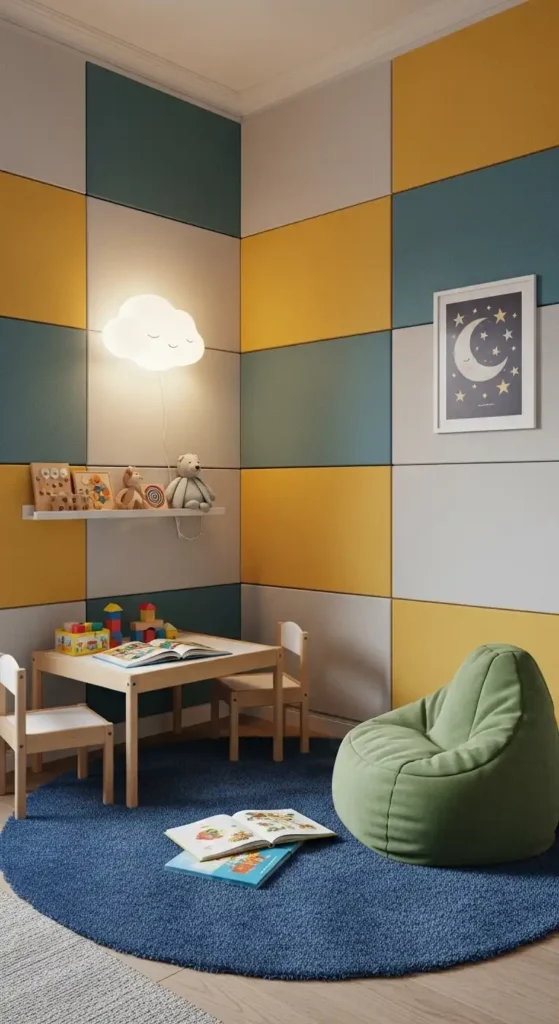
This design creates a balanced playroom environment. Kids can retreat when they need a break, making it perfect for homes with siblings or high-energy play spaces.
13. Under-Window Bench With Toy Compartments
An under-window bench with built-in toy compartments combines seating with storage. Kids can sit comfortably while having easy access to their favorite toys.
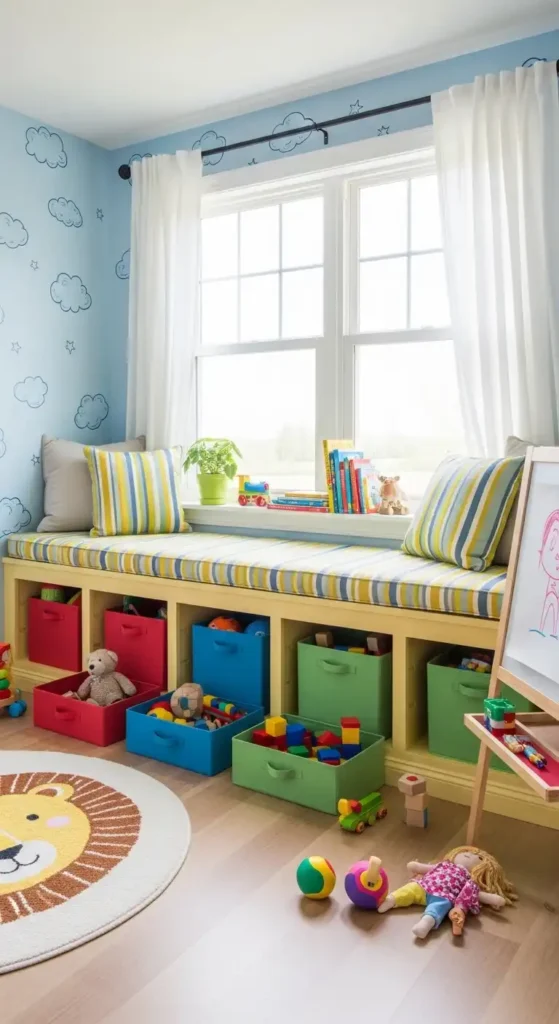
It also keeps toys organized and the playroom tidy. This multifunctional design maximizes space and encourages kids to put things back where they belong.
14. Adjustable Height Activity Tables That Grow With Kids
Adjustable height activity tables are versatile and grow with your child. They can be set low for toddlers and raised as kids get older.
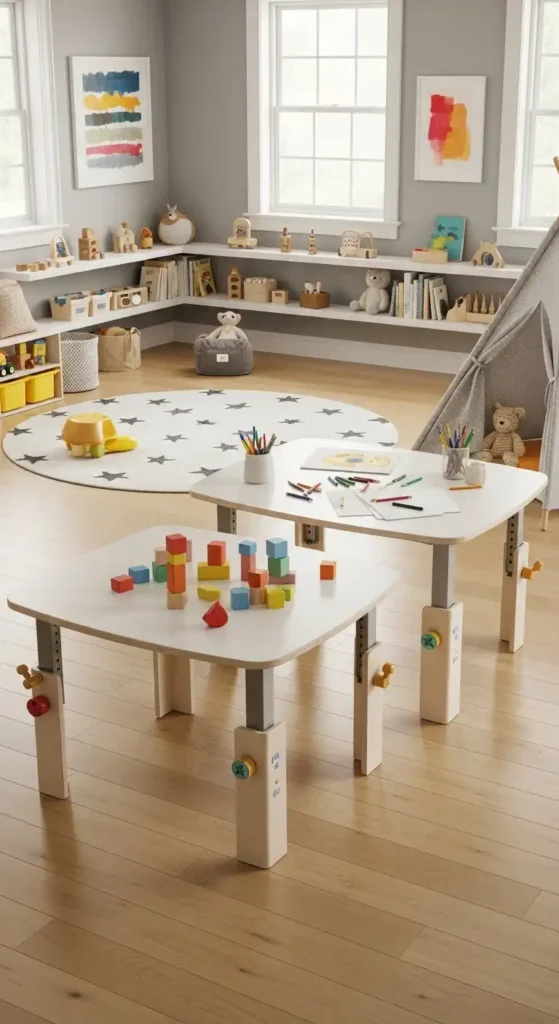
These tables are perfect for arts and crafts, puzzles, or homework. They promote ergonomic posture and make playtime or study time more comfortable.
15. Wall-Mounted Track Systems For Cars Or Trains
Wall-mounted track systems give kids a dedicated space to play with cars or trains without taking up floor space. Tracks can be easily rearranged for endless fun.
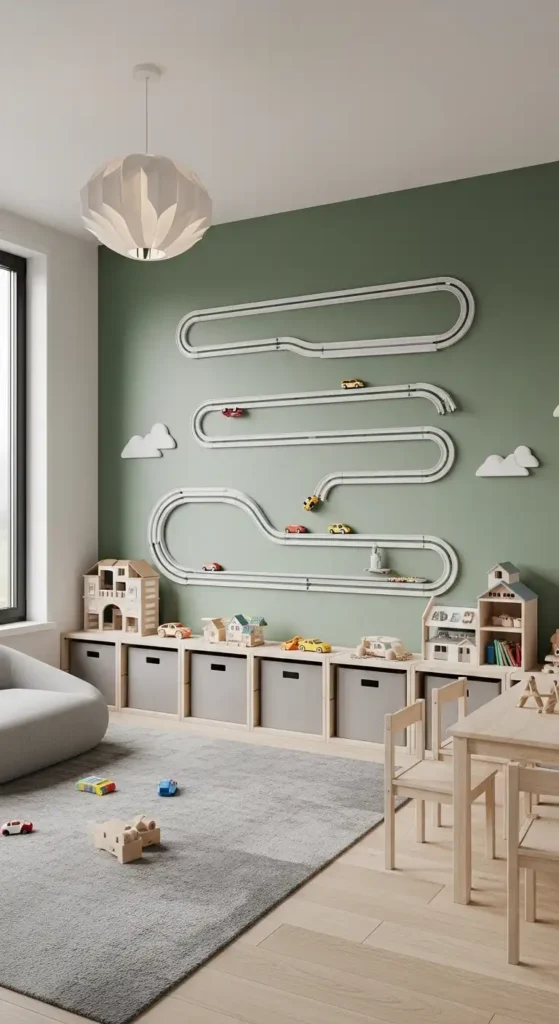
This design encourages creativity and motor skills. It also keeps tracks organized and prevents pieces from getting lost or scattered around the room.
16. Pop-Up Craft Cart That Can Be Moved Anywhere
A pop-up craft cart is portable and perfect for spontaneous art sessions. Kids can move it to any corner of the playroom or even outside for messy projects.
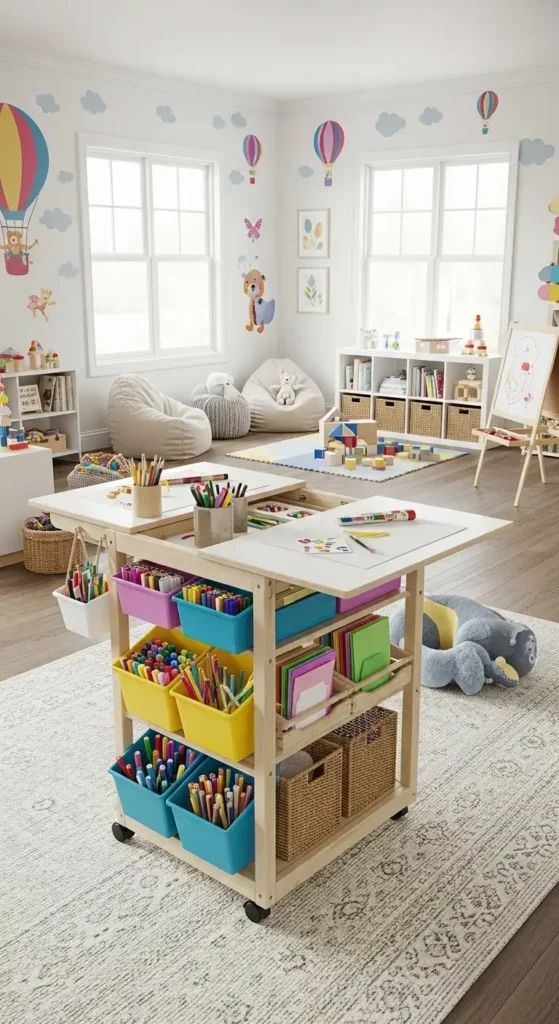
These kids playroom design ideas encourage creativity while keeping supplies organized. When not in use, it can be folded away, saving space and reducing clutter.
17. Soft Divider Panels To Create Temporary Zones
Soft divider panels allow you to create separate play zones within one room. Kids can have a reading corner, craft area, or building zone without permanent walls.
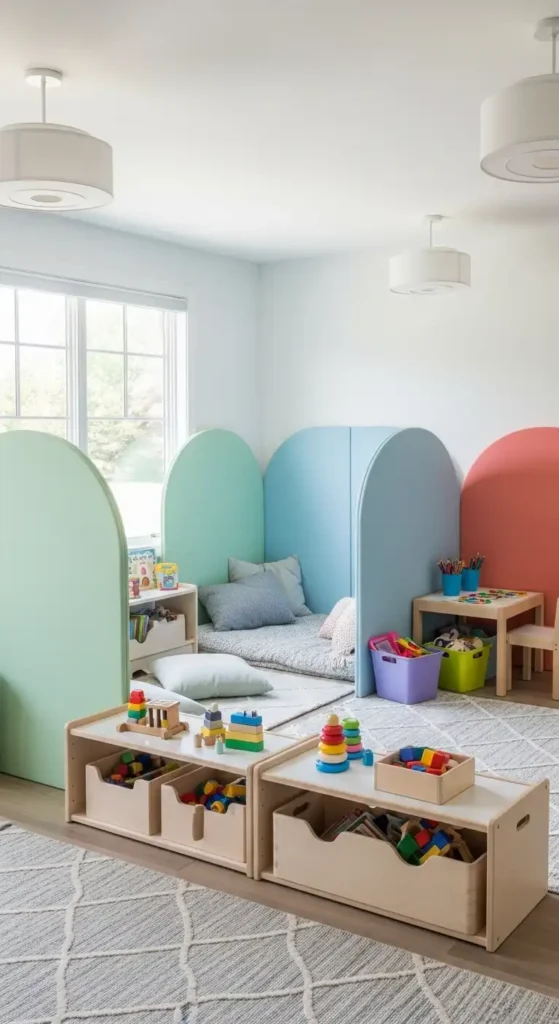
These panels are safe, lightweight, and easy to move. They help structure playtime and encourage kids to focus on different activities in designated areas.
18. Interactive Alphabet Or Number Floor Tiles
Interactive floor tiles with letters or numbers turn the floor into a learning space. Kids can hop, step, or play games while reinforcing early education skills.
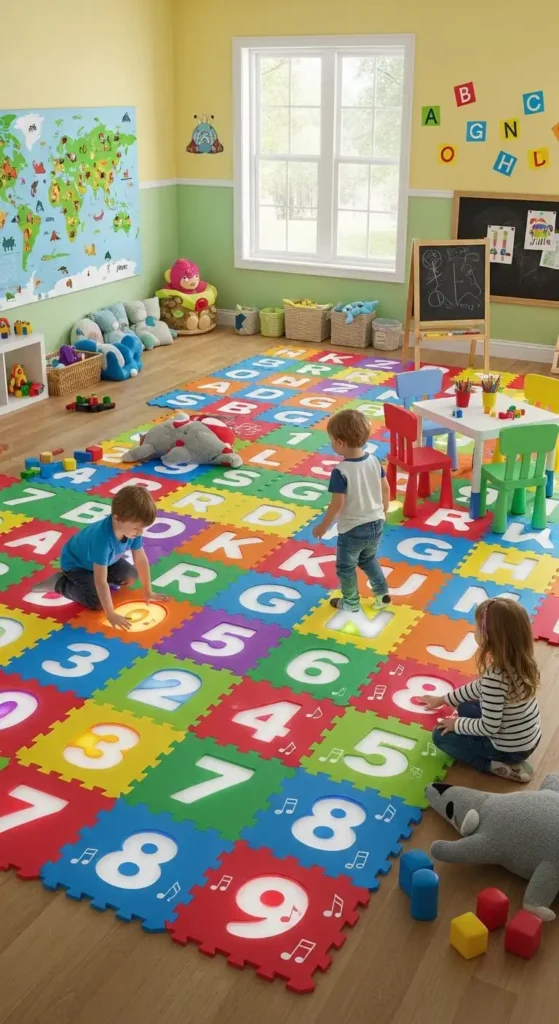
This design combines learning with active play. It’s perfect for toddlers and preschoolers, adding color, fun, and educational value to the playroom.
19. Foldable Playroom Furniture For Easy Room Reset
Foldable playroom furniture makes it easy to reconfigure the room. Tables, chairs, or mats can be folded and stored when space is needed for floor play.
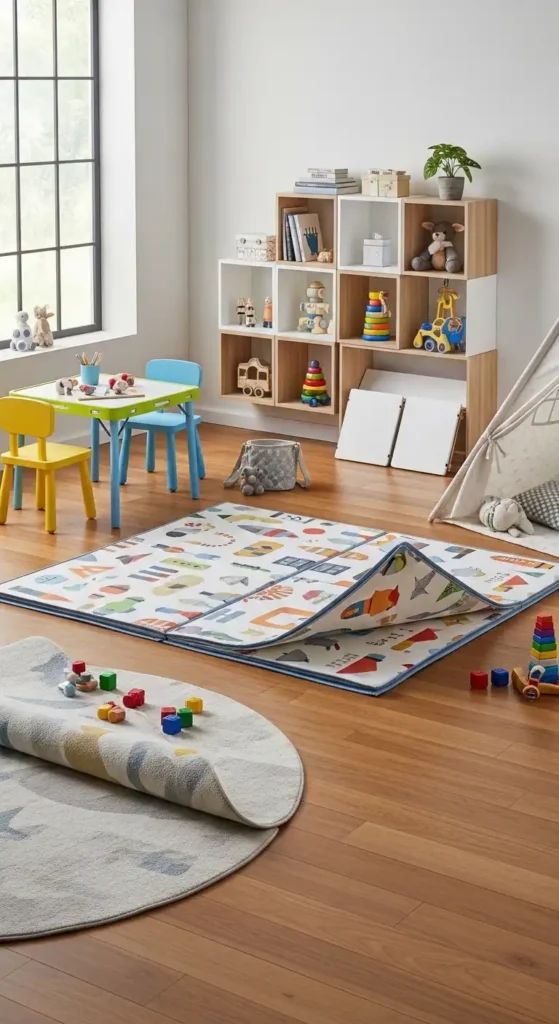
This design is ideal for small playrooms or multipurpose spaces. It teaches kids flexibility and helps parents keep the area neat and functional.
20. Personalized Name Wall Using Wooden Or Felt Letters
A personalized name wall adds a decorative and meaningful touch to the playroom. Wooden or felt letters make the space feel uniquely theirs.
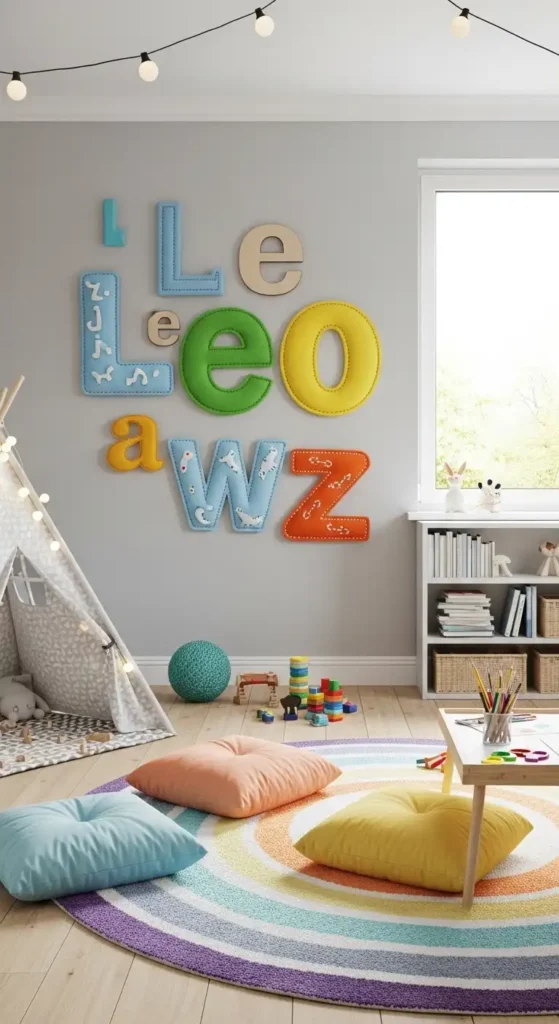
This design also encourages literacy and recognition of letters for younger children. It’s a fun, creative way to make the playroom feel personal and welcoming.
Tips to Maximize Space With Kids Playroom Design Ideas
Creating a kids’ playroom that’s both fun and functional can be a challenge, especially when space is limited. With the right design ideas, you can maximize every inch while keeping it safe, organized, and playful. Here are some practical tips to make the most of your kids’ playroom:
- Use Vertical Storage: Install shelves, wall hooks, or hanging organizers to keep toys and books off the floor.
- Choose Multi-Functional Furniture: Opt for storage benches, foldable tables, or bunk beds with built-in play areas.
- Create Zones: Designate areas for reading, art, and active play to keep the space organized.
- Opt for Clear Containers: Transparent bins make it easy for kids to find and put away toys.
- Incorporate Foldable or Stackable Items: Chairs, tables, and play mats that can be folded or stacked save valuable floor space.
- Use Wall-Mounted Boards: Chalkboards or magnetic boards provide creative space without taking up room.
- Keep the Floor Open: Maintain an open play area by moving storage to walls or corners.
- Rotate Toys Regularly: Keep only a few toys accessible at a time to reduce clutter and make the room feel larger.
- Bright Colors and Mirrors: Light shades and mirrors can visually expand the room and make it feel airy.
Best Lighting Options for a Bright and Cheerful Playroom
Good lighting is essential for creating a bright and cheerful playroom where kids can play, read, and do crafts comfortably. Natural light is always the best option, so make the most of windows with sheer curtains or low-level seating near sunlight. For cloudy days or evening play, a combination of ceiling lights, wall sconces, and floor lamps can ensure the room stays well-lit and inviting.
Layered lighting also adds a playful touch to the space. LED strip lights along shelves, colorful pendant lamps, or night-light projectors can make the room fun and visually stimulating. Choosing energy-efficient and safe lighting options ensures your playroom stays both bright and secure for kids of all ages.
Conclusion
Designing a kids’ playroom can be fun and practical. With the right storage, furniture, and décor, you can create a space for play and learning. Hidden storage, adjustable tables, and interactive features make the room both organized and exciting.
Focus on safety, creativity, and comfort. Even small spaces can be transformed into bright, cheerful playrooms. These kids playroom design ideas help make every corner inspiring and enjoyable for children.